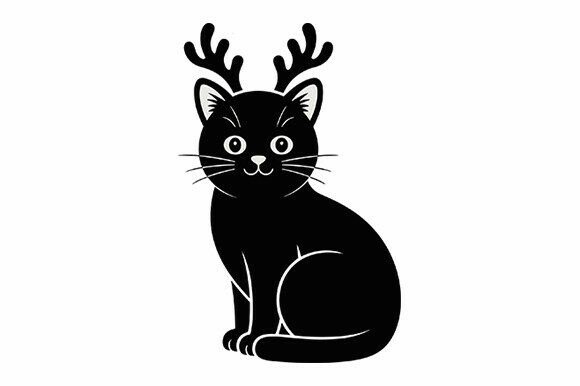
Christmas Reindeer Cat SVG Design
A Designer’s First Look: Whimsy with Purpose
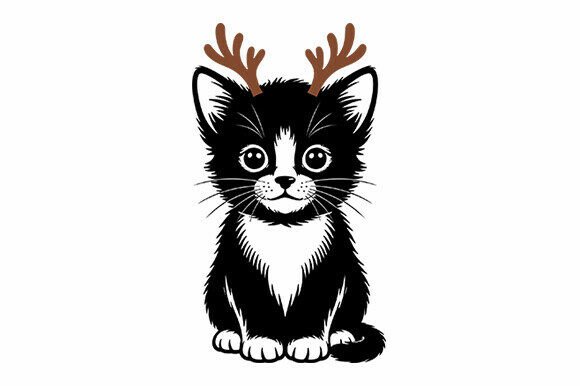
When I opened the Christmas Reindeer Cat SVG Design, my first thought wasn’t “cute”—it was “usable.” That’s rare. So many holiday embroidery files lean hard into novelty but fall short on stitchability, proportion, or visual balance. This one lands cleanly: a stylized cat wearing antlers and a tiny red scarf, with soft curves, intentional negative space, and just enough detail to read clearly at 3–4 inches wide. It doesn’t scream “clip art.” It whispers “handmade holiday charm”—the kind that belongs on a baby onesie, a linen tea towel, or the front pocket of a small-batch embroidered tote bag.
Real-World Testing: From Mockup to Stitched Reality
Last week, I prepped this design for a client’s holiday line of organic cotton aprons. We chose a medium-weight linen-cotton blend—textured but stable—and planned to stitch it centered above the pocket. Before hooping, I reviewed the vector layers in my digitizing software. The shape holds up well: no hairline gaps between antler tips and ears, no overlapping paths that could confuse an embroidery machine. The outline is clean, the internal details (like the cat’s whiskers and scarf folds) are simplified—not overly fussy—so they’ll translate reliably in satin and fill stitch without excessive thread build-up.
I ran test stitches on scrap fabric using standard tear-away stabilizer. At 3.5 inches wide, the design stitched smoothly across three fabric types: lightweight cotton jersey (with cut-away), midweight terry (with medium-weight cut-away + topping), and structured twill (with firm tear-away). No puckering. No skipped stitches. The antlers stayed crisp; the cat’s face retained expression. That tells me the Christmas Reindeer Cat SVG Design isn’t just pretty—it’s engineered for real-world embroidery conditions.
Where It Shines—and Where to Pause
This design excels in projects where warmth and approachability matter most: personalized baby embroidery, boutique sweatshirt embroidery, handmade pillow covers for nursery decor, and embroidered patches for holiday-themed craft fair merchandise. Its scale and simplicity make it ideal for custom apparel with limited real estate—think left-chest placements on crewneck sweatshirts or center-front stitching on kitchen towels.
That said, proceed with care on highly textured fabrics like bouclé or thick fleece—the fine scarf detail may blur. Avoid using it below 2.25 inches wide on stretchy knits unless you reinforce with high-quality stabilizer and reduce stitch density manually. On dark fabric, test thread color contrast early: a light gold or cream satin stitch reads beautifully against navy or charcoal, but white thread can look flat without proper underlay. And skip curved surfaces like cap fronts unless you’re confident in your hooping technique—the antlers extend outward and may lift slightly if tension isn’t dialed in.
What This Means for Your Craft Business
If you’re an Etsy seller or small shop owner building a holiday collection, the Christmas Reindeer Cat SVG Design adds instant personality without overcomplicating production. It pairs effortlessly with neutral backgrounds—no need for busy borders or extra embellishment. Customers respond to its quiet confidence: it feels special but not precious, festive but not frantic. That builds trust. When buyers see consistent, clean stitching on your finished product—whether it’s a hand-stitched patch sewn onto a denim jacket or a machine-embroidered tea towel—they associate your brand with intention, not impulse.
For digital product sellers, this file’s format mix (SVG, EPS, DXF, PNG) supports versatility: SVG for Cricut/Silhouette users, EPS for vector editing, DXF for CAD-based workflows, PNG for quick mockups. Just remember—this is a graphics file, not a pre-digitized embroidery file. You’ll need to convert it properly for machine embroidery use, especially if offering stitch-ready versions to customers.
Practical Designer Notes You’ll Actually Use
- Always test on scrap fabric first—especially with new stabilizer combos or thread brands.
- Check thread color contrast before final hooping. A single mismatched shade can mute the whole design’s cheer.
- Review stitch density in your digitizing software. Overly dense fills risk stiffness on baby items or lightweight totes.
- Confirm hoop size—the design fits comfortably in a 4×4 hoop, but verify clearance if adding text or borders later.
- Inspect small details closely: whiskers, scarf edges, and antler tips should remain legible after stitching—not lost in thread bleed.
- Test black-and-white mockups to assess silhouette strength. If it reads well in grayscale, it’ll hold up across fabric colors and lighting.
- Compare light vs. dark fabric backgrounds in your mockup stage—you’ll spot contrast issues before stitching begins.
- Use appropriate stabilizer: tear-away for stable wovens, cut-away for knits, and topping for napped or textured surfaces.
- Verify licensing terms before selling finished products or reselling digitized versions. This is an instant download file, so confirm commercial rights directly with the source.
Final Thought: Not Just Another Holiday Clip Art File
The Christmas Reindeer Cat SVG Design stands out because it respects both the maker and the end user. It doesn’t ask you to over-engineer it. It doesn’t demand special equipment or endless tweaks. It asks only that you bring intention—good stabilizer, thoughtful thread choices, and attention to fabric behavior—and it delivers a polished, heartfelt result. Whether you’re stitching a one-of-a-kind holiday gift or scaling up for a small-batch crafts line, this design earns its place in your workflow. It’s not flashy. It’s reliable. And in handmade work, reliability is the quietest form of magic.