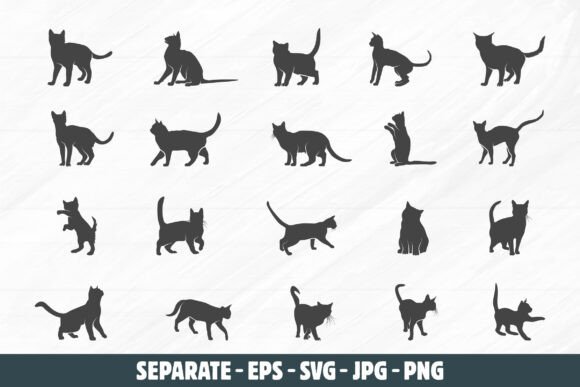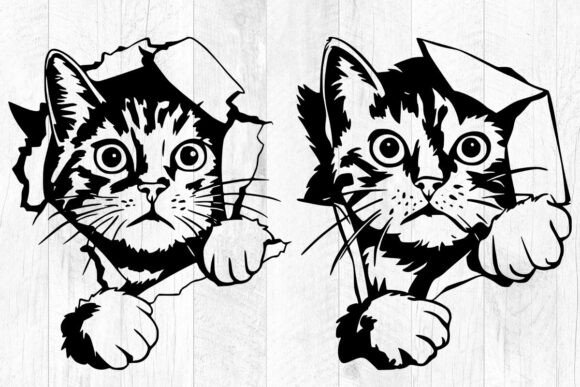
Kitty Cat SVG, Cute Animal Silhouette
First Impressions: Sweet, Simple, and Stitch-Ready
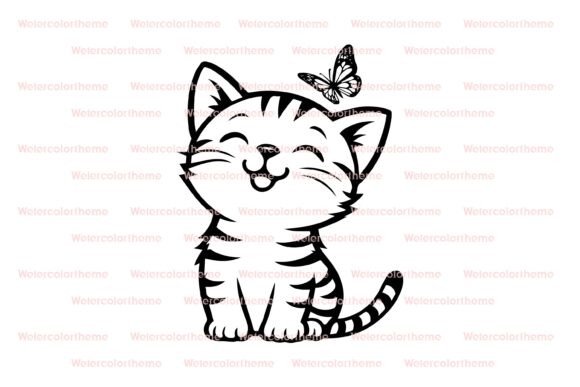
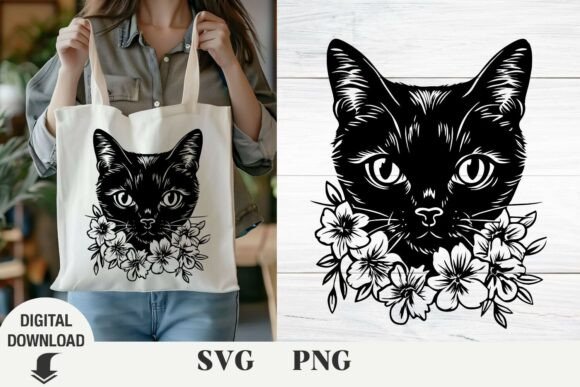
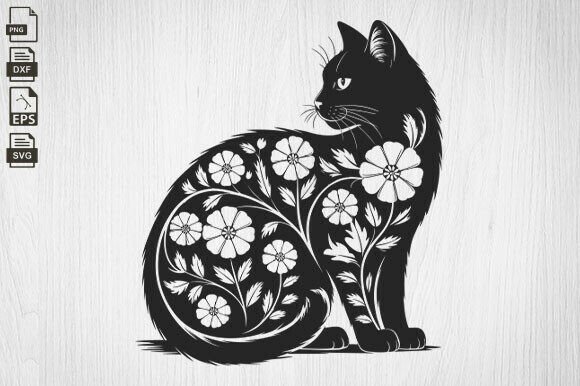
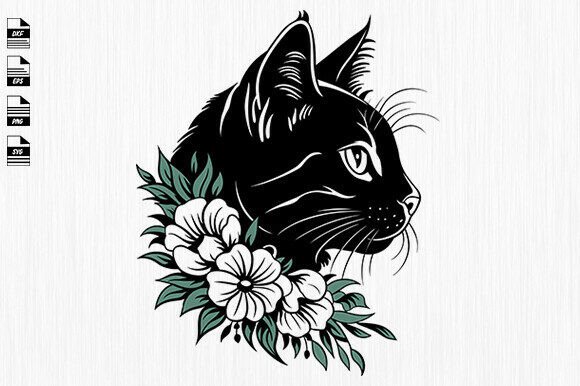
Opening the Kitty Cat SVG, Cute Animal Silhouette file feels like unrolling a sketch from a quiet afternoon—soft curves, clean lines, no fussy details. It’s not a hyper-realistic portrait or a cartoon with exaggerated features. It’s a silhouette: a gentle, slightly rounded cat head in profile, ears perked, tail curled just enough to suggest movement without clutter. The shape breathes. That’s rare in animal silhouettes, which often default to stiff or overly stylized forms. As an embroidery designer who’s stitched hundreds of pet-themed pieces for Etsy sellers and boutique clients, I immediately saw its potential—not as a standalone art print, but as a quiet hero on a linen tea towel, a tender accent on a baby onesie, or a subtle logo on a handmade apron.
Where This Kitty Cat SVG Actually Shines
This isn’t a design built for bold statement sweatshirts or dense multi-color applique. Its strength lies in restraint. I tested it recently on a natural cotton tote bag for a local nursery shop—no fill stitch overload, no satin-stitch borders competing for attention. Just one clean outline, lightly filled with open fill stitch at 30% density (adjusted in my software). The result? Crisp, breathable, and unmistakably *handmade*. Customers paused at the booth—not because it shouted, but because it felt intentional. That same Kitty Cat SVG, Cute Animal Silhouette worked beautifully on a lightweight organic cotton pillow cover, where heavy stitching would’ve stiffened the fabric. It also translated well into a small embroidered patch (2.2" wide), holding clarity even when scaled down. For craft business owners building cohesive collections—think matching kitchen towels, baby blankets, and greeting cards—the simplicity makes it easy to pair with coordinating fonts or minimalist floral motifs.
Real Embroidery Considerations You Can’t Skip
Don’t assume “cute” means “foolproof.” This design performs best when you respect its scale and structure. On stretchy fabrics like jersey or thin knits, it needs medium-weight cutaway stabilizer—especially around the ear tips and tail curve, where thread tension can pull and distort. On dark fabric, test your thread color first: a soft heather gray or warm oat thread reads warmer and more dimensional than stark white, which can look flat or clinical. And while the silhouette avoids tiny interior details, don’t skip checking corners in your embroidery software—some vector-to-embroidery conversions leave jagged nodes that translate to skipped stitches or visible jump threads.
It’s also not ideal for curved surfaces like structured caps unless you reduce size to under 1.8" and confirm your machine handles tight-radius satin stitch smoothly. Likewise, avoid layering it directly over seams or thick hems—it’s designed for flat, stable ground. If you’re using it for holiday embroidery (say, on a linen stocking), position it away from high-friction zones like the cuff or toe, where repeated washing could stress delicate fill areas.
What This Design Says About Your Brand—and Your Customers’ Trust
When a customer buys a personalized gift featuring the Kitty Cat SVG, Cute Animal Silhouette, they’re not just buying a cat. They’re buying gentleness. Nostalgia. Quiet craftsmanship. That matters—especially for Etsy sellers and small shop owners whose buyers choose handmade over mass-produced precisely for emotional resonance. A clean, well-executed version of this design signals care: careful digitizing, thoughtful thread choice, appropriate stabilizer use. It builds trust faster than a flashy but poorly stitched alternative. Conversely, rushing it onto a cheap poly-cotton blend without testing can flatten its charm—turning softness into stiffness, warmth into generic cuteness.
I’ve seen this exact silhouette used successfully by a children’s boutique owner who pairs it with hand-lettered names on muslin drawstring bags. The contrast between precise machine embroidery and soft, natural fabric elevates both elements. That synergy is why this Kitty Cat SVG, Cute Animal Silhouette works so well as part of a broader design system—not as a one-off graphic, but as a reliable, repeatable asset in your digital embroidery file library.
Practical Designer Notes Before You Stitch
- Always test on scrap fabric first—especially if using textured weaves like burlap or terry cloth, where stitch definition blurs easily.
- Review stitch density in your embroidery software. The original file may default to higher fill density; dial it back for breathable results on apparel or baby items.
- Confirm hoop size compatibility. While the design scales well, verify minimum recommended hoop dimensions before committing to production runs.
- Inspect small details at 200% zoom—look for stray nodes, overlapping paths, or inconsistent line weights that could cause thread breaks or uneven satin edges.
- Test black-and-white mockups to assess contrast and visual weight across light and dark backgrounds before finalizing product photos.
- Use proper stabilizer for your fabric type—cutaway for knits, tear-away for stable wovens, and wash-away for sheer layers like organza.
- Check licensing terms carefully before selling finished products or bundling the file into your own digital embroidery file packs. The listing mentions “commercial use” but verify scope—especially for resale as part of a larger Crafts or Graphics bundle.
A Final Thought for Makers and Sellers
The Kitty Cat SVG, Cute Animal Silhouette won’t win awards for complexity—but then, neither does a perfectly folded origami crane or a single perfect stitch on a hand-sewn hem. Its value is in its quiet confidence: it knows what it is, and it doesn’t overreach. For embroidery designers building real-world products—custom apparel, embroidered patches, nursery decor, or holiday gifts—it’s a dependable, emotionally intelligent tool. Not every design needs to dazzle. Sometimes, all it needs to do is land softly, hold its shape, and make someone smile when they unfold their tea towel or lift their baby’s onesie. That’s the kind of reliability that keeps craft businesses growing—one thoughtful stitch at a time.