Peeking American Shorthair Cat SVG
A Designer’s First Glance: Charm with Quiet Confidence
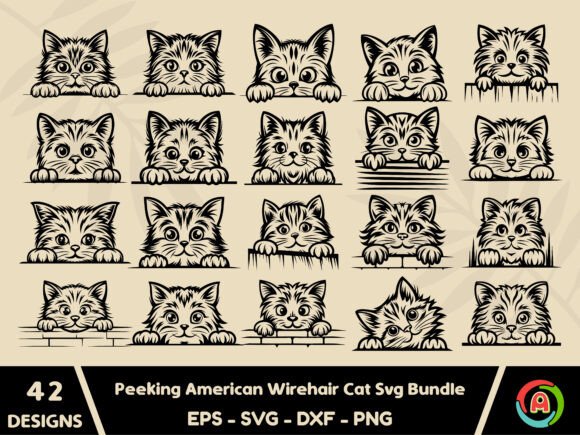
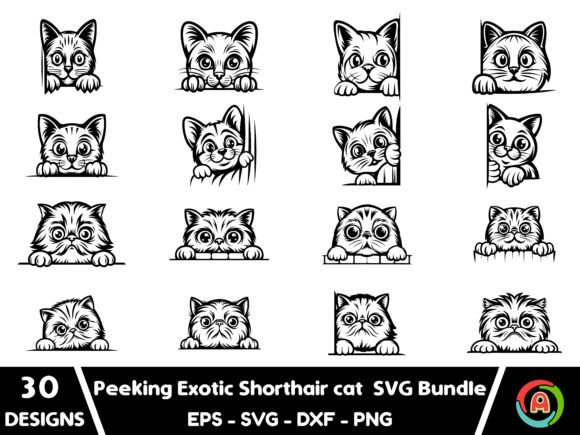
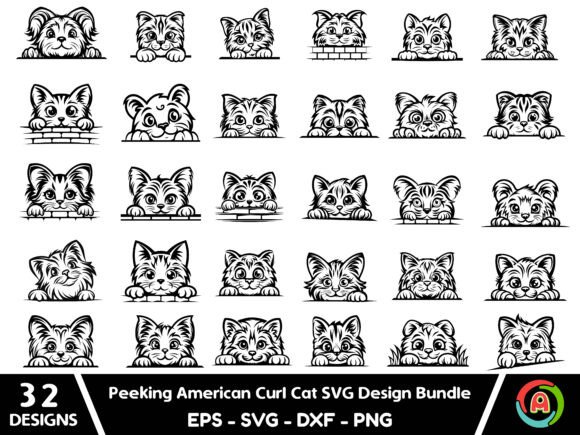
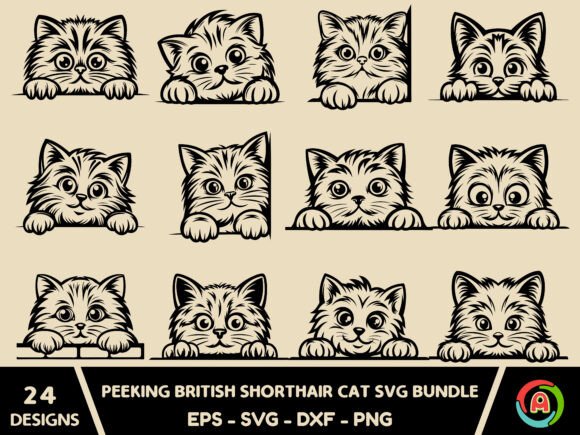
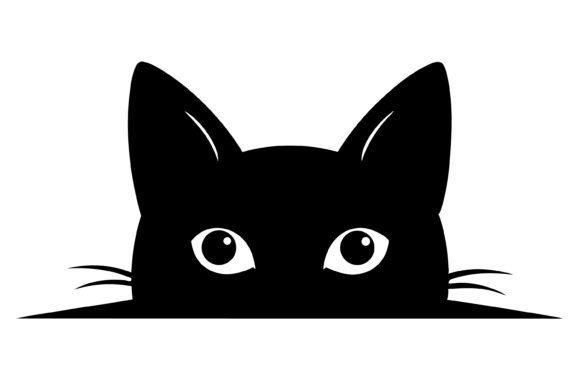
When I opened the Peeking American Shorthair Cat SVG, what struck me wasn’t just cuteness—it was intention. The cat’s head tilts just so, one ear slightly forward, eyes soft but alert, whiskers delicately implied rather than over-rendered. It’s not a cartoon; it’s a quiet, observant presence—friendly without being saccharine, detailed without demanding precision beyond what most home and small-batch embroidery machines can handle. As a designer who’s stitched hundreds of animal motifs for boutique totes, baby onesies, and Etsy-apron collections, I immediately saw where this design lands: in the sweet spot between charm and craft viability.
This Isn’t Just a Print—It’s a Stitch-Ready Mood
I tested the Peeking American Shorthair Cat SVG as the centerpiece for a linen tea towel series—something meant for kitchen gifting and small-shop shelf appeal. On screen, the vector lines are clean and balanced; the negative space around the cat’s face gives breathing room for stitch definition. In real embroidery, that translates to clear satin-stitched outlines and smooth fill-stitch transitions—no jagged edges or unintended thread nesting, even at 3.5" wide. The design’s compact silhouette (no sprawling limbs or long tails) makes it ideal for smaller hoop sizes—think 4x4 or 5x7—without sacrificing recognizability. That’s rare. Many “cute cat” files balloon awkwardly when scaled down, losing their personality. This one holds its shape.
Where It Shines—and Where You’ll Want to Pause
The Peeking American Shorthair Cat SVG excels on stable, medium-weight fabrics: cotton twill for patches, midweight sweatshirt fleece for custom apparel, and tightly woven linen for pillow covers or nursery decor. On a baby onesie? Yes—but only if you use lightweight tear-away stabilizer and reduce stitch density slightly. On stretchy jersey? Proceed with caution: the clean curves demand stability, so basting + cut-away stabilizer is non-negotiable. For dark fabric, test thread contrast first—especially around the eye highlights and inner ear details. A light gray or cream thread reads beautifully on navy or charcoal, but white can wash out subtle tonal shifts.
Curved surfaces like caps or tapered tote handles need careful placement. The design’s slight asymmetry (the peeking angle) means centering matters more than with symmetrical icons. I repositioned it twice on a baseball cap mockup before landing on the sweet spot—just above the bill’s curve, where the cat’s gaze naturally follows the wearer’s line of sight.
Real Impact on Your Finished Product
Customers don’t buy stitches—they buy feeling. And this design delivers warmth without cliché. On a personalized gift—a monogrammed baby blanket with the Peeking American Shorthair Cat SVG nestled beside the name—the reaction is consistent: “Oh! It’s *watching* me.” That subtle anthropomorphism builds connection. For your craft business, that means higher perceived value, stronger brand consistency (especially if you pair it with minimalist typography or earth-tone thread palettes), and better engagement in Etsy listings—where shoppers scroll fast but pause for genuine character.
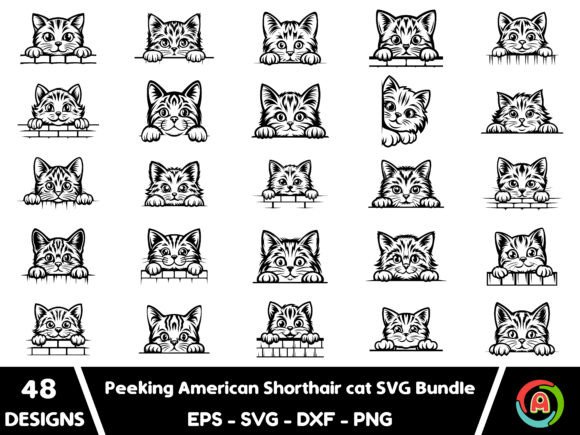
As a digital product seller, the file versatility matters. With EPS, SVG, DXF, and PNG included, you’re covered for both embroidery digitizing and printable mockups. But remember: the SVG isn’t automatically an embroidery file—it’s a vector source. You’ll still need to digitize it properly for your machine, adjusting underlay, pull compensation, and stop points for satin edges. Don’t skip that step, especially if you’re selling finished embroidered patches or commercial embroidery services.
Practical Notes Every Embroidery Designer Should Check
- Always test on scrap fabric first—especially with textured weaves like canvas or terry cloth, where stitch definition can blur.
- Review stitch density before finalizing. Too dense = puckering on thin cotton; too sparse = gaps on dark backgrounds.
- Confirm hoop size compatibility. While the design scales well, your machine’s maximum stitch area may limit how large you go without splitting the file.
- Inspect small details: the inner ear contour and whisker hints are subtle—if your digitizer simplifies them too much, you’ll lose the “peeking” nuance.
- Test black-and-white mockups. Does it hold up in grayscale? If yes, it’ll translate cleanly to single-color branding or vintage-style merchandise.
- Compare light vs. dark fabric backgrounds. Some thread colors flatter the cat’s expression more than others—navy + oatmeal, heather gray + ivory, or olive + cream all enhance its grounded, gentle tone.
- Use proper stabilizer—especially for layered garments (like quilted tote linings) where movement underneath affects topstitch clarity.
- Verify licensing before selling finished items or digital products. Since this is listed as a Graphics asset in the Crafts category, confirm whether commercial use includes resale of physical goods or only digital redistribution.
Final Thought: A Design That Earns Its Place
The Peeking American Shorthair Cat SVG doesn’t shout. It invites. That’s why it works so well for personalized gifts, small-shop merchandise, and handmade products where authenticity matters more than flash. It’s not a trend-chasing motif—it’s a quietly confident design asset that supports your craftsmanship instead of competing with it. Whether you’re stitching holiday embroidery for a local pet boutique, building an Etsy collection of cat-themed kitchen towels, or creating custom sweatshirt embroidery for a shelter fundraiser, this design feels intentional, scalable, and human-made—not mass-produced. And in today’s market, that distinction is everything.